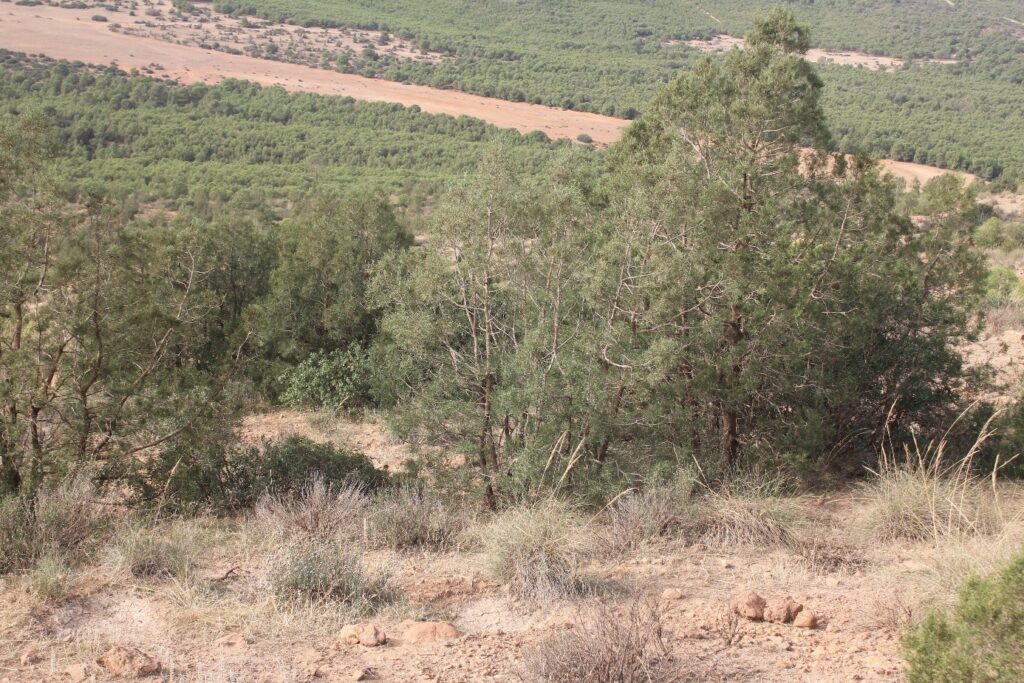
Mediterranean forests are subject to increasing anthropogenic and climatic pressures, which are particularly marked in the most challenging areas of the Mediterranean basin, characterised by semi-arid to arid climates. In this context, gaining a better understanding of the mechanisms that promote the resilience of forest ecosystems is a major challenge.
A recent study published in Forest Ecology and Management by Catherine Rébufa and its employees, conducted in these environments explored the effects of mixed forestry on ecosystem functioning, by comparing mixed stands (composed of around 60 % of Aleppo pine and 40 % of Berber cedar) with pure stands. Using an integrated approach to the soil-plant continuum, the results highlight several significant benefits associated with mixed planting.
In terms of soils, mixed stands have better porosity and permeability, as well as organic matter that is more easily decomposed. This dynamic is confirmed by increased microbial activity, reflecting more active biological functioning than in monospecific stands.
In terms of plants, Aleppo pine has longer needles when grown in mixed stands with Berberian cedar. Berberia cedar, for its part, has a higher concentration of flavonoids, compounds involved in stress tolerance, particularly in the face of drought and UV radiation.
These results underline the value of mixed forestry as a means of adapting to climate change, particularly in the Mediterranean regions most vulnerable to desertification.