
Infectious diseases are emerging more frequently these days, in connection with the loss of biodiversity and climate change. They represent a major threat to both wildlife and human populations, but their effects are often difficult to anticipate.
In social species such as primates, interactions between individuals can influence disease dynamics. However, for vector-borne diseases such as yellow fever, transmission relies primarily on the activity of mosquitoes. In primates, group size and movement influence exposure to vectors and, consequently, the risk of infection.
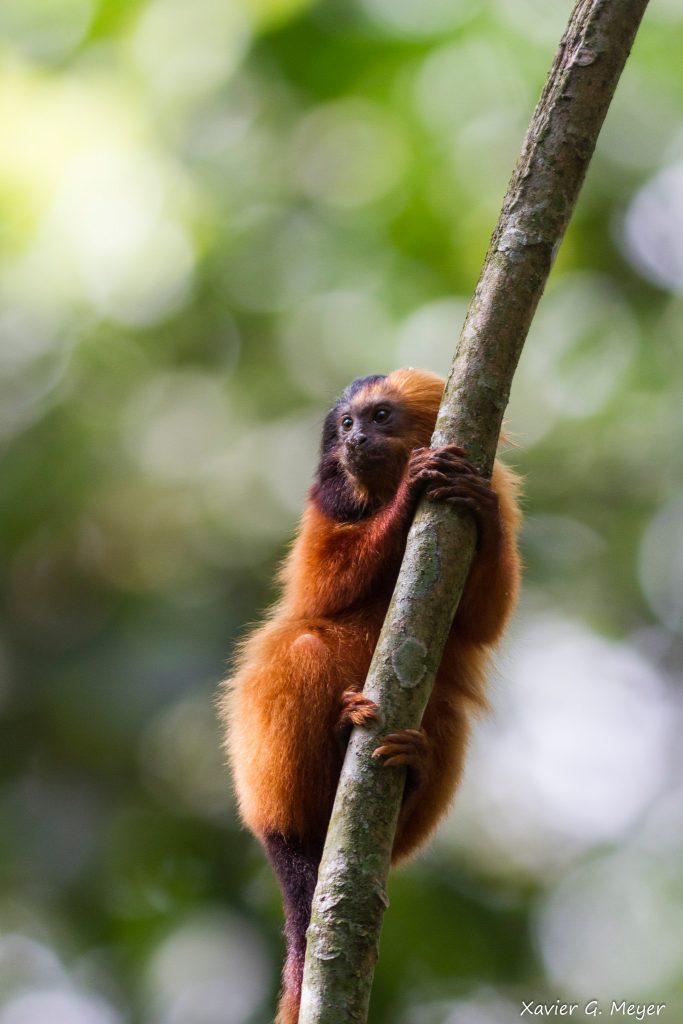
In this article, published in Journal of Animal Ecology, Aurore Ponchon, Rémi Choquet, Andreia F. Martins, Carlos Ruiz-Miranda, Cécile H. Albert and Valeria Romano, The authors explore these dynamics through the case of yellow fever in primates in Brazil, and in particular the golden lion tamarin (Leontopithecus rosalia), an emblematic and threatened species.
The results show that’an epidemic episode can not only affect the survival of individuals, but also modify their dispersal behaviour and movements in a highly fragmented forest landscape. These changes have major consequences for population dynamics and underline the importance of better understanding the links between diseases, behaviour and species conservation.