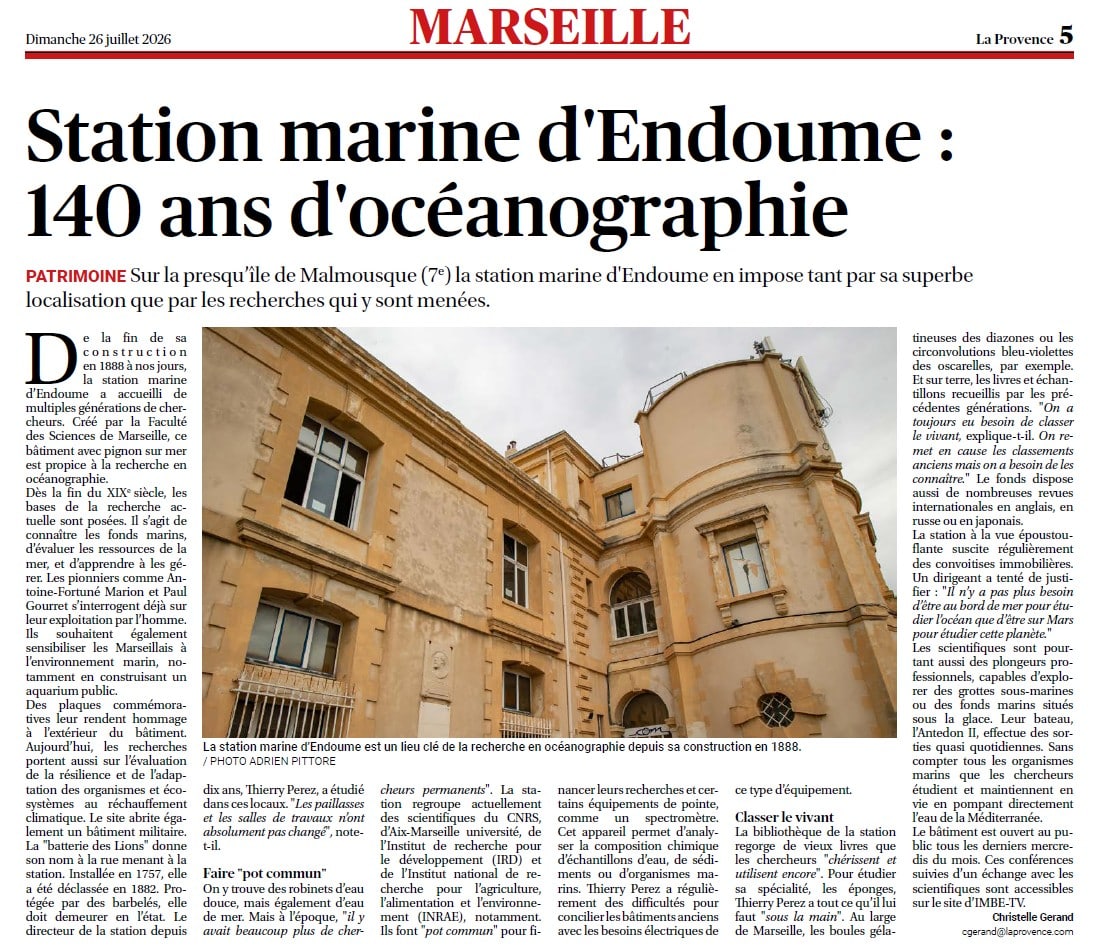
Endoume Marine Station
The Endoume Marine Station: a station steeped in history
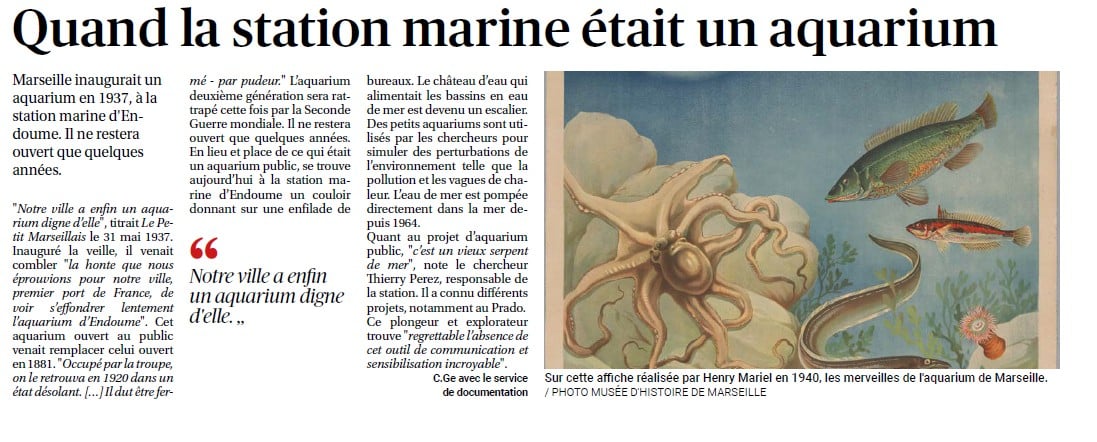
The Endoume Marine Station was founded in 1889 by the Faculty of Sciences of Marseille. Under the direction of Antoine Fortuné Marion at the time, between the late 19th and early 20th centuries it was home to scientists whose aim was to study the seabed in the Marseille region, and already to assess biological resources and learn how to manage them more effectively.
The laboratory’s golden age came after the Second World War. Also known as the Marseille Oceanography Centre, it was then headed by Jean-Marie Pérès, who, together with his colleague Jacques Picard, laid the foundations of benthic bionomics and recruited dozens of specialists in biological oceanography who initially set about describing marine biodiversity across the world’s oceans. As part of a wide range of collaborative projects, researchers at the Marine Station set up numerous research projects in France and abroad, and helped to establish teams and laboratories in the marine sciences (e.g. (Madagascar, Brazil, USA), and have developed internationally renowned expertise in natural history. As a result, since the Marine Station was established, nearly 2,000 species new to science have been described. They are now listed in the database https://sme-taxa.imbe.fr
Research at the Endoume Marine Station
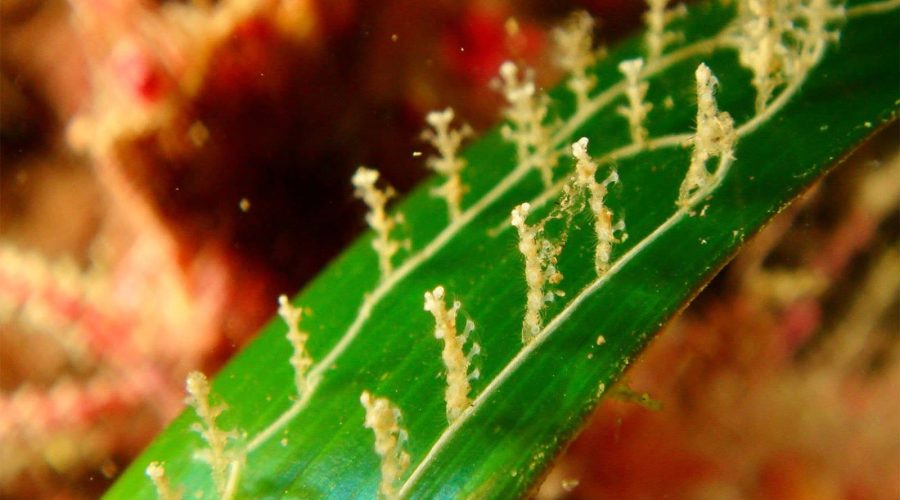
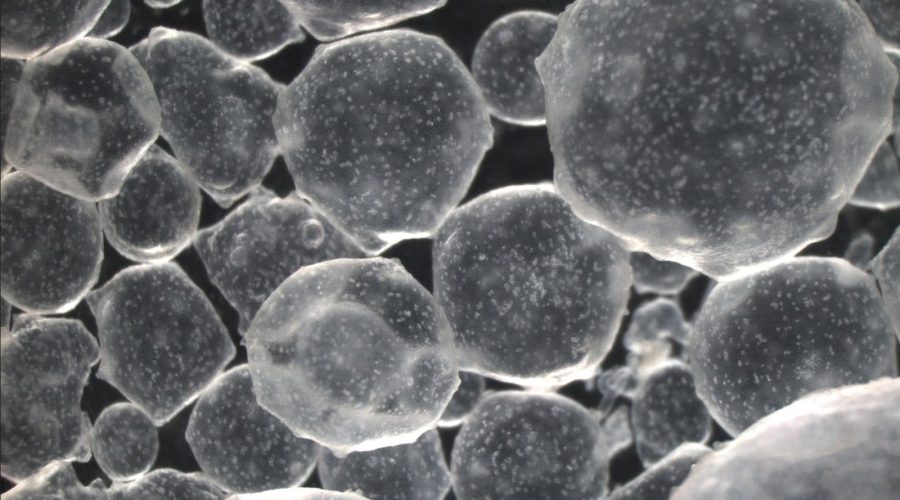
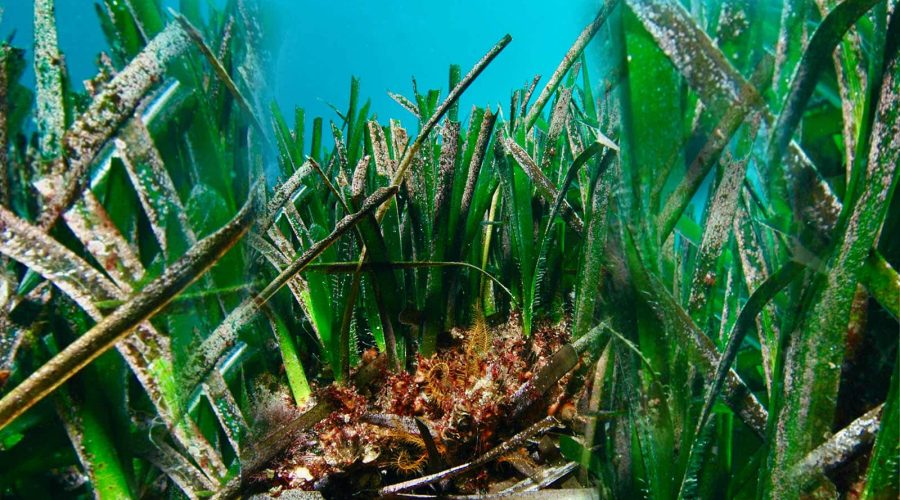
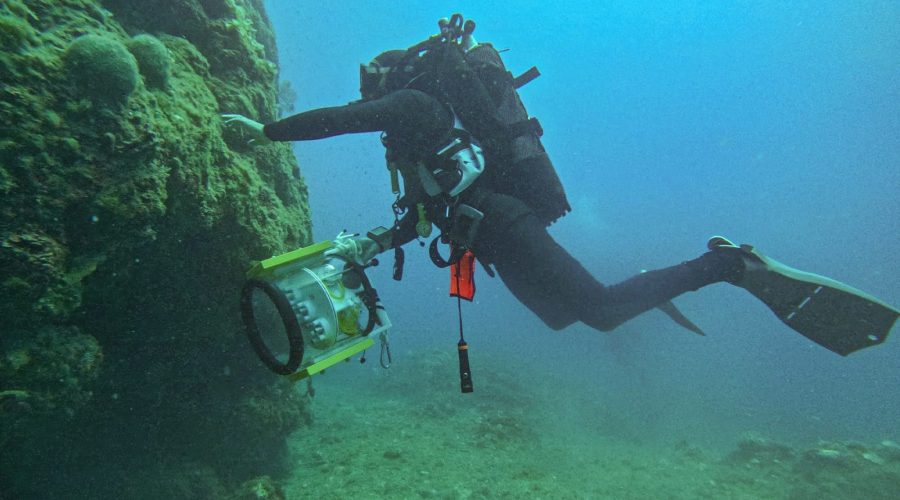
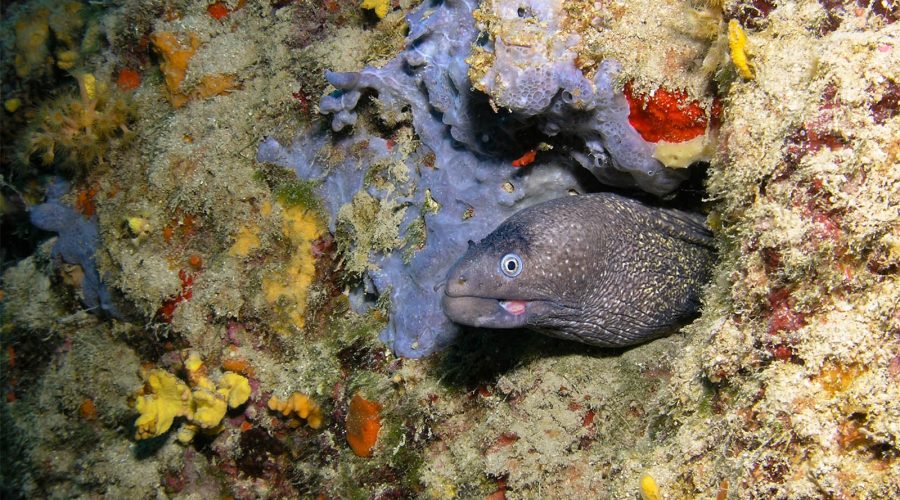
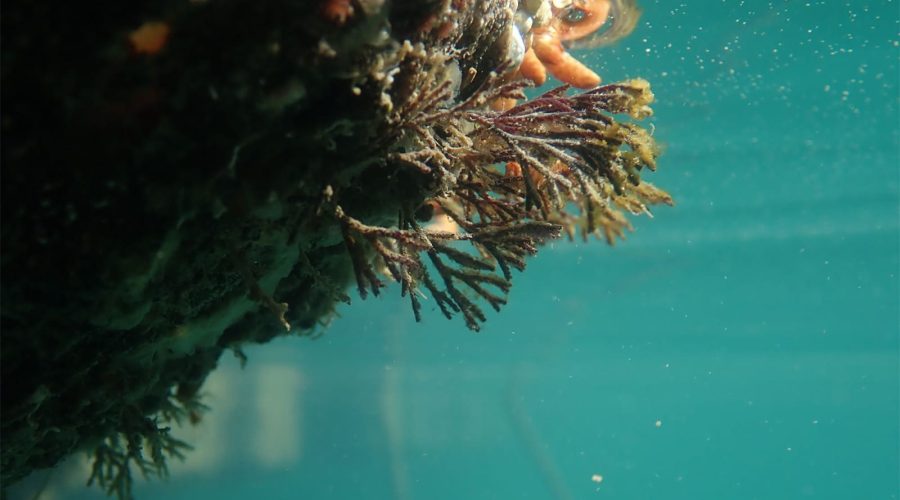
At the Endoume Marine Station, the IMBE carries out multidisciplinary research aimed at to describe and understand the dynamics and trends in coastal biodiversity.
Our research teams
- The BEEM team (Molecular Biology, Evolution and Ecology)
BEEM brings together expertise in biology, experimentation, analysis and modelling, focusing on the genetic variability for the study of the diversity, evolution and ecology of organisms. His research models cover a a wide range of organisations, from metazoans to viridiplantae and rhodophytes, as well as microbial communities from numerous phyla, in both marine and terrestrial environments. BEEM’s research themes are based on a solid conceptual foundation in evolutionary biology and on the universal methods for studying genomes, including systematics and biological evolution, genetics, community ecology and the eco-evolutionary response of organisms to environmental changes.
- The NEMO team (Nature, Marine Ecology and Oceans).
NEMO studies marine biodiversity in all its aspects by promoting a combination of naturalistic, chemical and experimental approaches. NEMO specialises in the ecology of specific ecosystems (underwater caves, coralligenous and coral reefs, deep-sea and polar environments, and urbanised environments such as ports and marinas). The team also studies the chemistry of natural substances, integrative taxonomy and the biology of certain marine invertebrates (notably sponges, anthozoans, crustaceans, bryozoans and ascidians).
Our Shared Services
The BEEM and NEMO teams draw on four shared services that provide technical expertise and resources:
The BMC service is a state-of-the-art technical facilities dedicated to the study of biological macromolecules (DNA, RNA and proteins). Equipped with dedicated rooms and a unidirectional organisation, it ensures optimal conditions for sensitive experiments. It provides comprehensive scientific support — shared equipment, expertise, training and advice — for a wide range of research projects, including conventional and unconventional biological models, both marine and terrestrial.
The SPOT service is dedicated to iimaging and the preparation of samples for microscopic observation and analysis. It covers a wide range of research areas, through the image production ranging from landscapes to cellular microstructures. The team is proficient in all these techniques and adapts them to the specific requirements of IMBE’s research projects. This department has a wide range of tools for image production (drones, binoculars, optical and electron microscopes) and offers techniques for preparing objects for observation (photogrammetry, petrography, pollen preparation, histology and cytology). The aim is to provide a advice and technical support to staff working on landscape change, life cycles, taxonomy, and morphological and cellular structure. The team also provides training for users in the various techniques used by the department. It has sorting, preparation and observation room.
The MSN programme falls within the field of chemical ecology, a multidisciplinary discipline that studies the interactions between organisms and their environment. These interactions are largely mediated by specialised metabolites, which are essential for chemical communication, defence against environmental stresses and, more broadly, the functioning of ecosystems and the organisation of biodiversity.
In this context, the metabolomics by mass spectrometry is a key tool for investigating qualitative and quantitative variations in metabolites in sessile marine and terrestrial organisms. In particular, this approach helps to address issues related to global change by characterising the metabolic responses of organisms to their environment. In order to complement and consolidate these analyses, the chemistry of natural substances It enables the purification, identification and structural characterisation of metabolites of interest. It therefore plays a key role in confirming the identity of the compounds detected and ensuring their absolute quantification in samples.
The EMM service enables the rearing, breeding and experimentation on marine invertebrates studied at the station. It has three dedicated rooms : one tank containing artificial seawater and two containing natural seawater, with a collection of around forty aquariums of various sizes. These approaches ex situ are supplemented by approaches in situ, carried out by IMBE divers with the assistance of the OSU Pytheas Joint Diving Unit. The availability of this service at the Endoume site ensures a fast and secure transport of samples from the point of collection at sea to the aquariums, thereby minimising disturbances and facilitating the acclimatisation of biological models.
IMBE TV: a channel dedicated to the dissemination of scientific knowledge
The marine station also hosts the channel IMBE TV website, dedicated to disseminating and promoting the research carried out at the marine station and within the IMBE. Through original content (videos, reports, interviews), it highlights fieldwork, scientific projects and the latest research developments. This initiative helps to make the accessible scientific knowledge to a wide audience and to strengthen the links between science and society.
Among the various sections on offer, two formats in particular illustrate this approach:
This a series of public lectures enables researchers to present their work in an accessible and user-friendly format.
These meetings encourage direct interaction with the public and play an active role in promoting scientific literacy, particularly in relation to environmental and marine issues.
The magazine C Published showcases the scientific publications of the IMBE and the Pythéas Institute.
In each episode, an author presents their research and the findings they have obtained. This format allows viewers to discover a new scientific paper on a regular basis, illustrated with images, whilst making this content more accessible to everyone.
IMBE’s Educational Activities at the Endoume Marine Station
75% of the permanent staff at the IMBE based at the Endoume Marine Station are lecturers and researchers, and are therefore heavily involved in the degree programmes offered by Aix-Marseille University, including the Bachelor’s degrees in Life Sciences (SV) and Earth and Life Sciences (SVT) (life and earth sciences), and the OSU Pythéas Master’s programmes (Biology, Ecology and Evolution, and Marine Sciences). As part of these programmes, the marine station hosts the following each year:
- A dozen Year 3 pupilsth First year of the Bachelor’s degree in Life and Earth Sciences, specialising in biology and ecology, as part of the «Fieldwork and Observation Placement» teaching module. The aim is for students to carry out a project on coastal biodiversity based on samples collected in situ, observations and interpretations.
- Around twenty first-year Master’s students in Marine Sciences at the EU, enrolled on the «Operational Taxonomy» course, which aims to train students in the basics of taxonomic identification for the main phyla of benthic animals (arthropods, molluscs, annelids, echinoderms, urochordates, cnidarians, sponges and bryozoans). The aim is to understand the main distinguishing criteria, learn how to use identification keys and recognise local species.
- A large number of students from the first year of a bachelor’s degree to the second year of a master’s degree, either on voluntary work placements or as part of their degree programmes (on average 15–20 per year).
Knowledge transfer to society
Public lectures
All the the last Wednesday of each month, the Endoume marine station welcomes the " Endoume Wednesday Lectures", which are open to the general public. They offer visitors the chance to discover the the latest scientific advances in coastal biodiversity and marine ecosystems, as well as the research carried out at the IMBE, and more broadly within the’OSU andAix-Marseille University.
School visits
As part of special partnerships with certain primary schools (for example The Rose Garden in the 13007 postcode area or Mazargues Centre) or during the Science Festival, researchers and academic staff at the IMBE welcome an average of one class a year. The aim is to share their knowledge and make it accessible to young pupils.
Welcome events for secondary school teachers
As part of the «Teachers and Researchers Meet», we are co-organising with the Research and Innovation Division of the Aix-Marseille Regional Education Authority an annual visit for a group of secondary school teachers.
This meeting includes:
Presentations on the trends, vulnerability and protection of coastal biodiversity
A lunch to encourage conversation and discussion
A guided tour of the site, accompanied by technical staff and professional divers